After a year abroad, we came home to Ramallah. The children and I landed in Israel while Osama, my partner, had to fly into Jordan
After a year in the United States, we returned to Israel/Palestine. This time, I decided to come out of the closet: I am Jewish, Israeli and American, and I am married to a Palestinian man, an academic from a Muslim family. We live in the metropolitan area of Ramallah/Al Bireh with our two children, five year-old Forat and two-year old Adam. One of my children’s grandfathers helped to conquer and occupy Palestine in 1967. Their other grandfather fled Palestine because of the occupation, abandoning their father, my partner, Osama. We are a loving family, and one of its members is breaking her silence.
In the taxi from the airport I asked the taxi driver, a Palestinian resident of east Jerusalem, for an update on the checkpoints.
“Is the Jib checkpoint open?”
“Yes, only for entry to Ramallah.”
“Of course. And the DCO checkpoint?”
“In both directions. But it doesn’t open until 10 am for travel into Jerusalem.”
“That’s great,” I said. When we left a year ago, the checkpoint was open in one direction only.
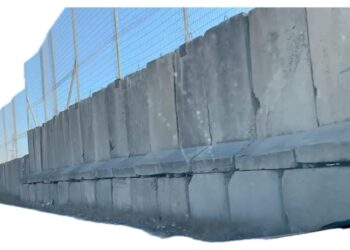
The paved streets of the Givat Zeev settlement – traffic circles, bus stops, manicured public gardens with shaded playgrounds for children – ended. We turned left toward the checkpoint. We entered the chaos of Jib, one of five villages encircled in four directions by the separation barrier built in the West Bank. The wall around the enclave has two tunnels allowing Palestinian cars to travel in and out. We entered through the checkpoint next to Givat Zeev, which is open to Israelis and to Palestinian workers who have permits to work in the settlements. We would leave through a tunnel underneath the wall, on the other end of the enclave, that allows access to the Ramallah metropolitan area. The other entrances and exits end in a concrete wall.
Dusty cars lined both sides of the street, leaving a single narrow lane for traffic in both directions. We drove over large potholes, jagged speed bumps that appeared without warning and small stores, some of which still bore signs in Hebrew, inviting residents of Givat Zeev to wash their cars there. We continued to the village of Bir Nabala, to the tunnel underneath the separation barrier. Above us was the continuation of Begin Road, a major Jerusalem thoroughfare. Another wall lines both sides of that highway, preventing Israeli drivers from seeing what they are driving over.
Adam slept. His hands and face were sticky from “healthy chocolate” – chocolate balls made of dates, walnuts, cashews and raw cocoa – that I gave him and Forat generously in order to survive the baggage claim at Ben Gurion Airport. Forat looked outside the window, sleepy and cranky. Before we left the United States, she had asked why her father wasn’t traveling with us.
“You remember those people at the checkpoints, the one that have trouble sharing?” I asked her in response. We hadn’t talked about soldiers in a long time.
In the weeks after we first arrived in the U.S., Forat had asked a lot of questions about checkpoints. “Does Baba need a permit in order to come with us to the restaurant?” And: “Why isn’t Baba coming with us to Cambridge? He doesn’t have a permit?”
“Here in the United States, Baba doesn’t need a permit,” I would answer her. But a month ago I started to remind her that in Israel/Palestine, there are people who have trouble sharing, and for that reason they erected checkpoints. That they allow only some people to cross. That Baba usually can’t cross, because he is Palestinian, but Ima and Forat and Adam can always cross, because we are Israeli. And that Ima and Baba think that everyone should be allowed to cross.
“Is Baba already in the new house?” Forat asked.
“Not yet, sweetheart.”
I hadn’t heard from Osama, who should have landed in Jordan four hours ago. I didn’t know which stage he had reached inside the “belly of the beast,” as he called the Allenby Bridge border crossing between Jordan and Jericho: The interrogation by Jordanian internal security forces? Waiting for approval from the Israeli soldiers? The rubber stamp of the Palestinian Authority? As usual, because my route was predictable, I carried everything: two exhausted children, six suitcases, two carry-on bags, two “personal items”, a jogging stroller and a car seat. I hoped Osama would arrive quickly and with the emotional reserves needed to cheer up Forat and Adam.
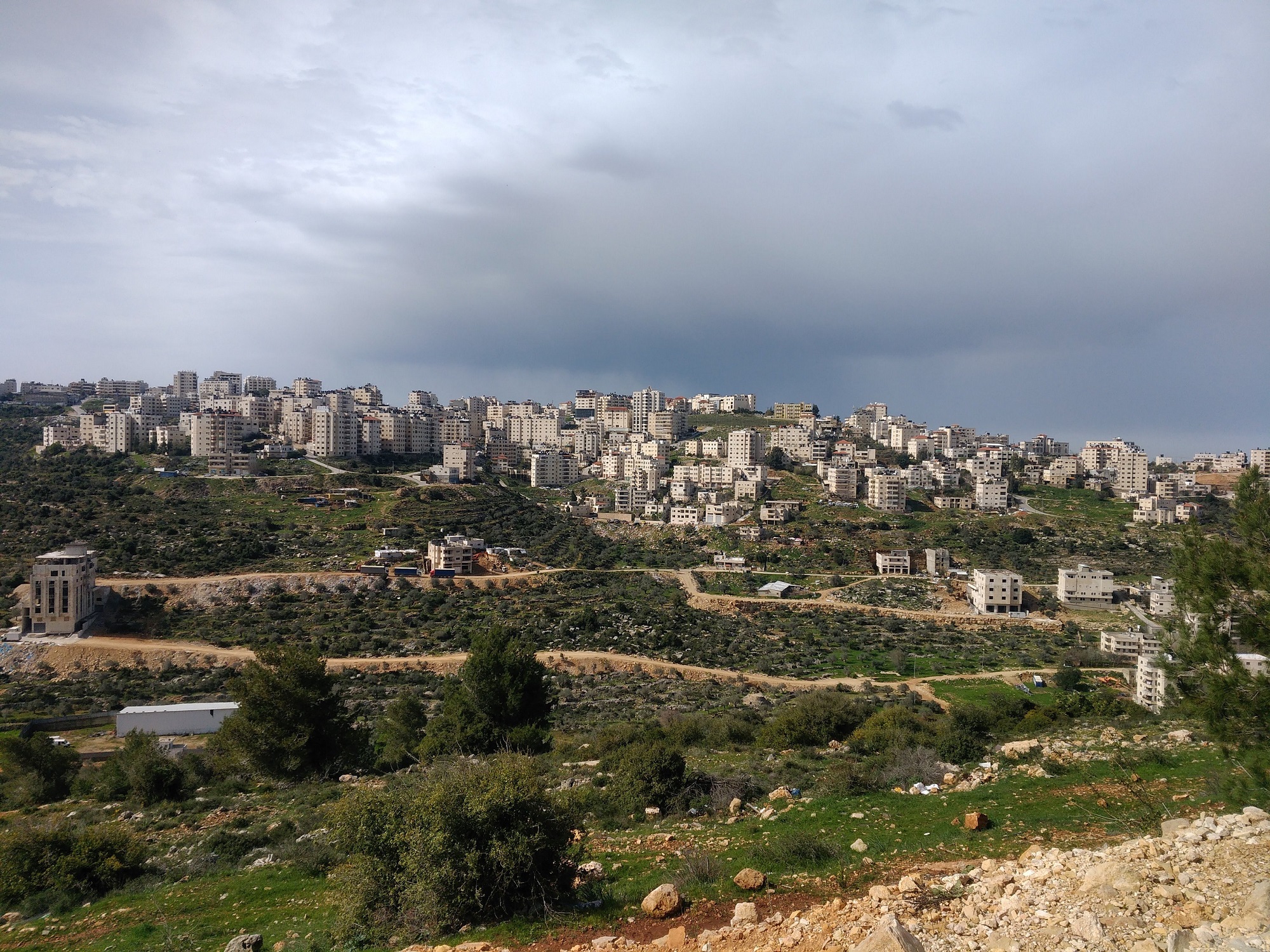
The taxi approached the Ramallah metropolitan area. Blue skies, horizon, steep and breathtaking ascents and descents. The taxi driver watched me in the rearview mirror, listening to my conversation with Forat in Hebrew. Adam woke up. The driver took a sharp curve, and Adam immediately vomited. Stomach bile and liquefied healthy chocolate dripped from his chin and shirt.
“It’s just on my car seat,” I reassured the driver. “Your taxi is clean.”
Adam began to cry. I sang him “The Wheels on the Bus.” His sobbing intensified and turned into a scream. Forat joined him: “Stoppp!”
We came home.
This post was also published at haaretz.com on December 10, 2019:
https://www.haaretz.com/israel-news/israeli-palestinians-jewish-coexistence-1.8232199


Your posts, Umm Forat, are a touching yet dismal testimony to the unhumanitarian situation caused by the Israeli occupation in all aspects of private life for families in your circumstances.
Do you have a support group to assist mixed Israeli (Jewish) and Palestinian couples with housing, child care, etc. when in an extreme case the families on both sides disown them and their lives may even be threatened by one of their members?
Are families where one partner is a Palestinian resident of Jerusalem in a better position- travel, access to social services, Israel pension funds and medical and other insurances?